 |
Peano
|
|
Peano
|
Finite Volumes with a Rusanov Riemann solver and optimistic explicit Euler time stepping, realised over a block-structured mesh. More...
Public Member Functions | |
| __init__ (self, Solver solver, int patch_size, int overlap=1, float cfl_constant=0.9, float damp_time_step_size=0.95, bool spawn_optimistic_calculations_as_task=True, float min_volume_size=None, float max_volume_size=None) | |
| The constructor memorises the attributes. | |
| str | kernel_function_name (self) |
| Name of the generated time step kernel. | |
| Solver.MeshAdaptation | create_default_mesh_adaptation (self) |
| The Finite Volume schemes adapt the mesh and balance the load through exahype2.api.fv.AdaptMeshAndBalanceLoad by default. | |
| construct_output (self, exahype2_project, peano_project, time_step) | |
| Has to be implemented by subclass. | |
Data Fields | |
| min_volume_size | |
| max_volume_size | |
| patch_size | |
| Optimistic branch: insert the patch interior once the shell is updated. | |
| overlap | |
| Optimistic branch: insert the patch interior once the shell is updated. | |
| kernel_namespace | |
| cfl_constant | |
| Both branches: reduce the cells' maximum eigenvalues into the next time step size. | |
| damp_time_step_size | |
| Both branches: spawn the next time step's patch interior update. | |
| spawn_optimistic_calculations_as_task | |
Protected Attributes | |
| _solver | |
| Build the reconstruction tasks befilling the patch_with_halo, which is logically temporary. | |
 Protected Attributes inherited from exahype2.api.Solver.Solver.NumericalScheme | |
| _solver | |
Private Member Functions | |
| __create_data_structures (self) | |
| Create the mesh data structures (a Finite Volume patch per cell, plus the face-based overlap patches used to reconstruct its halo) this numerical scheme requires. | |
| __add_data_to_repository (self, peano_project) | |
| Consult Introduce a new numerical scheme for some information how this routine fits to the typical workflow when we introduce a new solver. | |
| __create_time_step_functions (self, output_directory) | |
| Calling this function is delayed until all PDE term information is provided. | |
| __construct_kernel_call (self, Target target, bool stateless, str function_name=None) | |
| This function constructs the calls to the compute kernels based on the application PDE terms and the version chosen. | |
Finite Volumes with a Rusanov Riemann solver and optimistic explicit Euler time stepping, realised over a block-structured mesh.
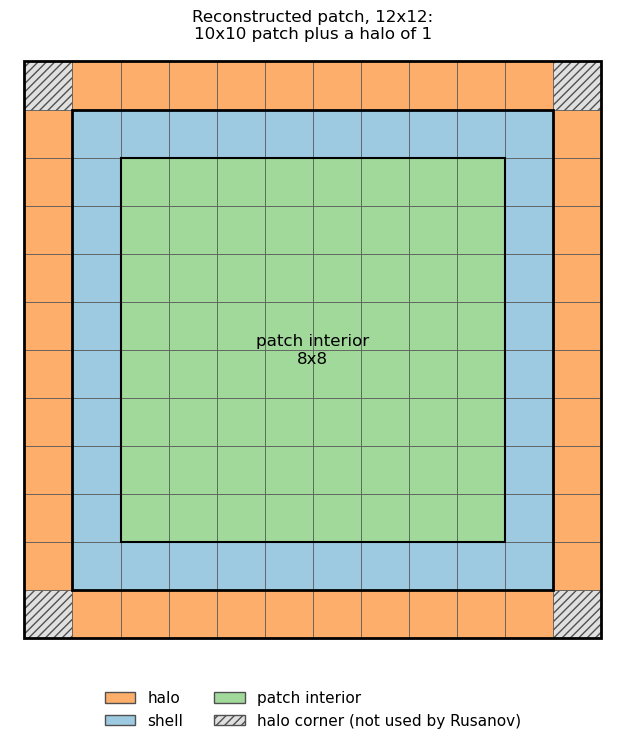
The finite volume solver operates over a block-structured mesh, where each cell of the mesh holds a patch of finite volumes. This solver's fundamental idea is that it splits up the patch into three classes of volumes. Assume we have a NxNxN patch of volumes, where N is the patch_size, and this patch is surrounded by a halo of size H. So we have in total a (N+2H)x(N+2H)x(N+2H) patch that feeds into the time stepping as reconstructed patch. We now distinguish three classes of volumes:
The sketch below shows the three classes for a 2d patch with N=10 and H=1. It is generated by src/exahype2/api/fv/rusanov-with-optimistic-explicit-euler-illustrations.py.
For the new solver, we now define two new update kernels:
The 3D variants follow equivalently.
Every time step either runs the traditional branch (Update cell and Discard patch interior) or the optimistic branch (Update cell shell and Insert patch interior). The traditional branch runs if the solver's time step size is zero, or if the estimated time step size, i.e. the second entry of the eigenvalue data, exceeds it. The optimistic branch runs otherwise. Project on faces, Compute global CFL condition and Spawn patch interior update follow either branch. If at least one axis of the domain is not periodic and the solver uses Dirichlet boundary conditions, Apply Dirichlet BCs sets the ghost volumes along the domain boundary before Reconstruct reads them (
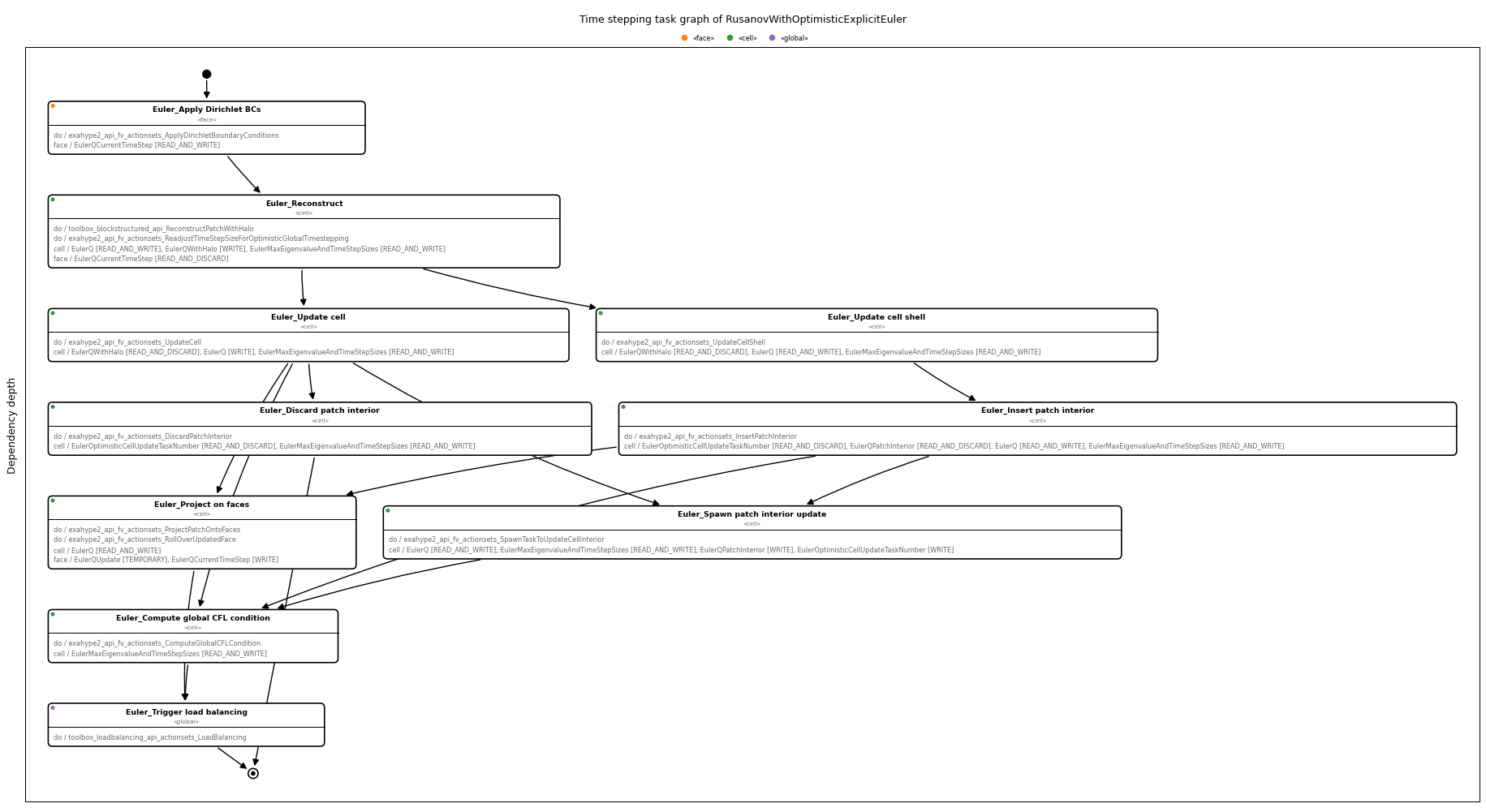
The estimate is the admissible time step size of the current time step, i.e. the one the solver could have chosen if it had not been enforced to use a smaller one, times damp_time_step_size. Reconstruct memorises the admissible time step size per cell (
Compute global CFL condition does not only compute the next time step size, it also makes it the solver's time step size and time stamp straightaway (
If spawn_optimistic_calculations_as_task is set, the spawn runs the patch interior update as a task. Insert patch interior waits for this task before it copies the patch interior into the patch, and Discard patch interior waits for it, too, so no task is still running when the next one is spawned. The task numbers are held per cell.
Definition at line 782 of file RusanovWithOptimisticExplicitEuler.py.
| exahype2.api.fv.RusanovWithOptimisticExplicitEuler.RusanovWithOptimisticExplicitEuler.__init__ | ( | self, | |
| Solver | solver, | ||
| int | patch_size, | ||
| int | overlap = 1, |
||
| float | cfl_constant = 0.9, |
||
| float | damp_time_step_size = 0.95, |
||
| bool | spawn_optimistic_calculations_as_task = True, |
||
| float | min_volume_size = None, |
||
| float | max_volume_size = None |
||
| ) |
The constructor memorises the attributes.
However, it does not do this within this class, but it adds the important properties straight to the solver, so anybody else working against this solver knows about the properties introduced by the numerical scheme.
patch_size: int Number of Finite Volumes per axis within one patch (i.e. within one mesh cell).
overlap: int Number of Finite Volumes the halo layer reconstructed around a patch - from the neighbouring patches' faces - is wide.
cfl_constant: float Safety factor the admissible time step size (
damp_time_step_size: float Factor, smaller or equal to one, which the current time step size is multiplied with to estimate the time step size of the patch interior update (
spawn_optimistic_calculations_as_task: bool If True, Spawn patch interior update spawns the patch interior update as a task, and Insert patch interior and Discard patch interior wait for this task. The task number is held per cell (
min_volume_size: float The time step asks for a refinement of a cell only if its volumes are at least of this size (exahype2.api.blockstructured.DynamicMeshRefinement). None (the default) does not bound the refinement.
max_volume_size: float The time step asks for an erase, i.e. coarsening, of a cell only if the volumes of the coarser cell would be strictly smaller than this size. None (the default) does not bound the coarsening.
Reimplemented from exahype2.api.Solver.Solver.NumericalScheme.
Definition at line 878 of file RusanovWithOptimisticExplicitEuler.py.
References exahype2.api.fv.RusanovWithOptimisticExplicitEuler.RusanovWithOptimisticExplicitEuler.__init__().
Referenced by exahype2.api.fv.RusanovWithOptimisticExplicitEuler.RusanovWithOptimisticExplicitEuler.__init__().
|
private |
Consult Introduce a new numerical scheme for some information how this routine fits to the typical workflow when we introduce a new solver.
Definition at line 1113 of file RusanovWithOptimisticExplicitEuler.py.
References solvers.aderdg.actionsets.AbstractADERDGActionSet.AbstractADERDGActionSet._solver, solvers.fv.actionsets.AbstractFVActionSet.AbstractFVActionSet._solver, solvers.fv.EnclaveTasking.UpdateCell._solver, solvers.fv.SingleSweep.UpdateCell._solver, solvers.limiting.actionsets.AbstractLimiterActionSet.AbstractLimiterActionSet._solver, solvers.rkdg.actionsets.AbstractRungeKuttaDGActionSet.AbstractRungeKuttaDGActionSet._solver, exagrype.api.FD4WithKODissipation.FD4WithKODissipation._solver, exahype2.api.blockstructured.AdaptMeshAndBalanceLoad.AdaptMeshAndBalanceLoad._solver, exahype2.api.blockstructured.ConsumeRefinementRequests.ConsumeRefinementRequests._solver, exahype2.api.blockstructured.DynamicMeshRefinement.DynamicMeshRefinement._solver, exahype2.api.blockstructured.LoadCheckpoint._LoadPatchesFromCheckpoint._solver, exahype2.api.blockstructured.LoadCheckpoint.LoadCheckpoint._solver, exahype2.api.fv.actionsets.AbstractFVActionSet.AbstractFVActionSet._solver, exahype2.api.fv.actionsets.ApplyDirichletBoundaryConditions.ApplyDirichletBoundaryConditions._solver, exahype2.api.fv.actionsets.DiscardPatchInterior.DiscardPatchInterior._solver, exahype2.api.fv.AdaptMeshAndBalanceLoad.AdaptMeshAndBalanceLoad._solver, exahype2.api.fv.PlotAsVTKFile.PlotAsVTKFile._solver, exahype2.api.fv.RusanovWithExplicitEuler.RusanovWithExplicitEuler._solver, exahype2.api.fv.RusanovWithOptimisticExplicitEuler.RusanovWithOptimisticExplicitEuler._solver, exahype2.api.fv.SetupSimulationOverRegularGrid.SetupSimulationOverRegularGrid._solver, exahype2.api.fv.SetupSimulationWithUserCodedRefinementCriterion.SetupSimulationWithUserCodedRefinementCriterion._solver, exahype2.api.fv.WriteCheckpoint.WriteCheckpoint._solver, exahype2.api.rkfd4.actionsets.AbstractRKFD4ActionSet.AbstractRKFD4ActionSet._solver, exahype2.api.rkfd4.actionsets.ApplyDirichletBoundaryConditions.ApplyDirichletBoundaryConditions._solver, exahype2.api.rkfd4.AdaptMeshAndBalanceLoad.AdaptMeshAndBalanceLoad._solver, exahype2.api.rkfd4.CentralDifferencesWithRungeKutta.CentralDifferencesWithRungeKutta._solver, exahype2.api.rkfd4.PlotAsVTKFile.PlotAsVTKFile._solver, exahype2.api.rkfd4.SetupSimulationOverRegularGrid.SetupSimulationOverRegularGrid._solver, exahype2.api.rkfd4.WriteCheckpoint.WriteCheckpoint._solver, exahype2.api.Solver.Solver.SolverGenerator._solver, exahype2.api.Solver.Solver.NumericalScheme._solver, exahype2.api.Solver.Solver.GridConstruction._solver, exahype2.api.Solver.Solver.Plotter._solver, exahype2.api.Solver.Solver.MeshAdaptation._solver, 20_additional-solver-steps.RusanovWithDensityFloor._solver, and 20_additional-solver-steps.RungeKuttaWithDensityFloor._solver.
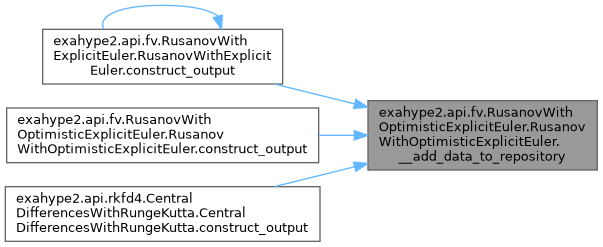
Referenced by exahype2.api.fv.RusanovWithExplicitEuler.RusanovWithExplicitEuler.construct_output(), exahype2.api.fv.RusanovWithOptimisticExplicitEuler.RusanovWithOptimisticExplicitEuler.construct_output(), and exahype2.api.rkfd4.CentralDifferencesWithRungeKutta.CentralDifferencesWithRungeKutta.construct_output().
|
private |
This function constructs the calls to the compute kernels based on the application PDE terms and the version chosen.
| function_name | str Name of the kernel to call. Defaults to kernel_function_name, i.e. the kernel updating the whole patch. |
Definition at line 1556 of file RusanovWithOptimisticExplicitEuler.py.
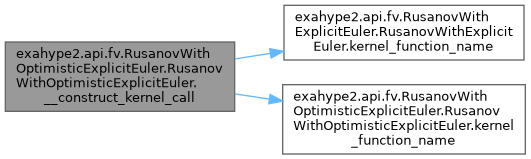
References solvers.aderdg.actionsets.AbstractADERDGActionSet.AbstractADERDGActionSet._solver, solvers.fv.actionsets.AbstractFVActionSet.AbstractFVActionSet._solver, solvers.fv.EnclaveTasking.UpdateCell._solver, solvers.fv.SingleSweep.UpdateCell._solver, solvers.limiting.actionsets.AbstractLimiterActionSet.AbstractLimiterActionSet._solver, solvers.rkdg.actionsets.AbstractRungeKuttaDGActionSet.AbstractRungeKuttaDGActionSet._solver, exagrype.api.FD4WithKODissipation.FD4WithKODissipation._solver, exahype2.api.blockstructured.AdaptMeshAndBalanceLoad.AdaptMeshAndBalanceLoad._solver, exahype2.api.blockstructured.ConsumeRefinementRequests.ConsumeRefinementRequests._solver, exahype2.api.blockstructured.DynamicMeshRefinement.DynamicMeshRefinement._solver, exahype2.api.blockstructured.LoadCheckpoint._LoadPatchesFromCheckpoint._solver, exahype2.api.blockstructured.LoadCheckpoint.LoadCheckpoint._solver, exahype2.api.fv.actionsets.AbstractFVActionSet.AbstractFVActionSet._solver, exahype2.api.fv.actionsets.ApplyDirichletBoundaryConditions.ApplyDirichletBoundaryConditions._solver, exahype2.api.fv.actionsets.DiscardPatchInterior.DiscardPatchInterior._solver, exahype2.api.fv.AdaptMeshAndBalanceLoad.AdaptMeshAndBalanceLoad._solver, exahype2.api.fv.PlotAsVTKFile.PlotAsVTKFile._solver, exahype2.api.fv.RusanovWithExplicitEuler.RusanovWithExplicitEuler._solver, exahype2.api.fv.RusanovWithOptimisticExplicitEuler.RusanovWithOptimisticExplicitEuler._solver, exahype2.api.fv.SetupSimulationOverRegularGrid.SetupSimulationOverRegularGrid._solver, exahype2.api.fv.SetupSimulationWithUserCodedRefinementCriterion.SetupSimulationWithUserCodedRefinementCriterion._solver, exahype2.api.fv.WriteCheckpoint.WriteCheckpoint._solver, exahype2.api.rkfd4.actionsets.AbstractRKFD4ActionSet.AbstractRKFD4ActionSet._solver, exahype2.api.rkfd4.actionsets.ApplyDirichletBoundaryConditions.ApplyDirichletBoundaryConditions._solver, exahype2.api.rkfd4.AdaptMeshAndBalanceLoad.AdaptMeshAndBalanceLoad._solver, exahype2.api.rkfd4.CentralDifferencesWithRungeKutta.CentralDifferencesWithRungeKutta._solver, exahype2.api.rkfd4.PlotAsVTKFile.PlotAsVTKFile._solver, exahype2.api.rkfd4.SetupSimulationOverRegularGrid.SetupSimulationOverRegularGrid._solver, exahype2.api.rkfd4.WriteCheckpoint.WriteCheckpoint._solver, exahype2.api.Solver.Solver.SolverGenerator._solver, exahype2.api.Solver.Solver.NumericalScheme._solver, exahype2.api.Solver.Solver.GridConstruction._solver, exahype2.api.Solver.Solver.Plotter._solver, exahype2.api.Solver.Solver.MeshAdaptation._solver, 20_additional-solver-steps.RusanovWithDensityFloor._solver, 20_additional-solver-steps.RungeKuttaWithDensityFloor._solver, exahype2.api.fv.RusanovWithExplicitEuler.RusanovWithExplicitEuler.kernel_function_name(), and exahype2.api.fv.RusanovWithOptimisticExplicitEuler.RusanovWithOptimisticExplicitEuler.kernel_function_name().
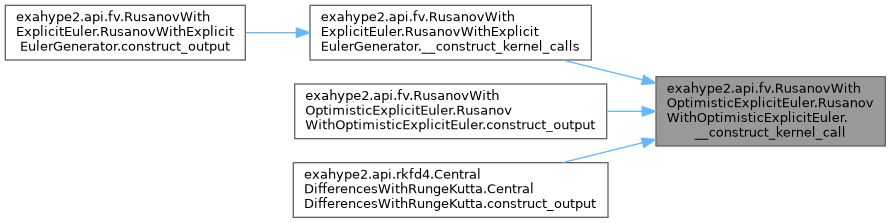
Referenced by exahype2.api.fv.RusanovWithExplicitEuler.RusanovWithExplicitEuler.construct_output(), exahype2.api.fv.RusanovWithOptimisticExplicitEuler.RusanovWithOptimisticExplicitEuler.construct_output(), and exahype2.api.rkfd4.CentralDifferencesWithRungeKutta.CentralDifferencesWithRungeKutta.construct_output().
|
private |
Create the mesh data structures (a Finite Volume patch per cell, plus the face-based overlap patches used to reconstruct its halo) this numerical scheme requires.
Ported from the legacy exahype2.solvers.fv.FV.create_data_structures(): one peano4.api.datamodel.Patch of patch_size^d Finite Volumes per mesh cell (_patch), plus a halo-augmented copy of it (_patch_with_halo, (patch_size+2*overlap)^d,
All six are assigned onto self._solver (the shared exahype2.api.Solver instance both this numerical scheme and its surrounding solver's Solver.GridConstruction/Solver.Plotter counterparts hold a reference to as self._solver), not onto self, since the remaining FV action sets that need them -
Storage is hardwired to smart pointers (peano4.api.datamodel's PatchToDoubleArrayWithSmartPointer), matching the legacy default (Storage.SmartPointers for both cell and face data) - the legacy Storage enum's other two backends (CallStack, Heap) are not exposed here.
Two pieces of the legacy method are deliberately not ported yet:
Definition at line 960 of file RusanovWithOptimisticExplicitEuler.py.
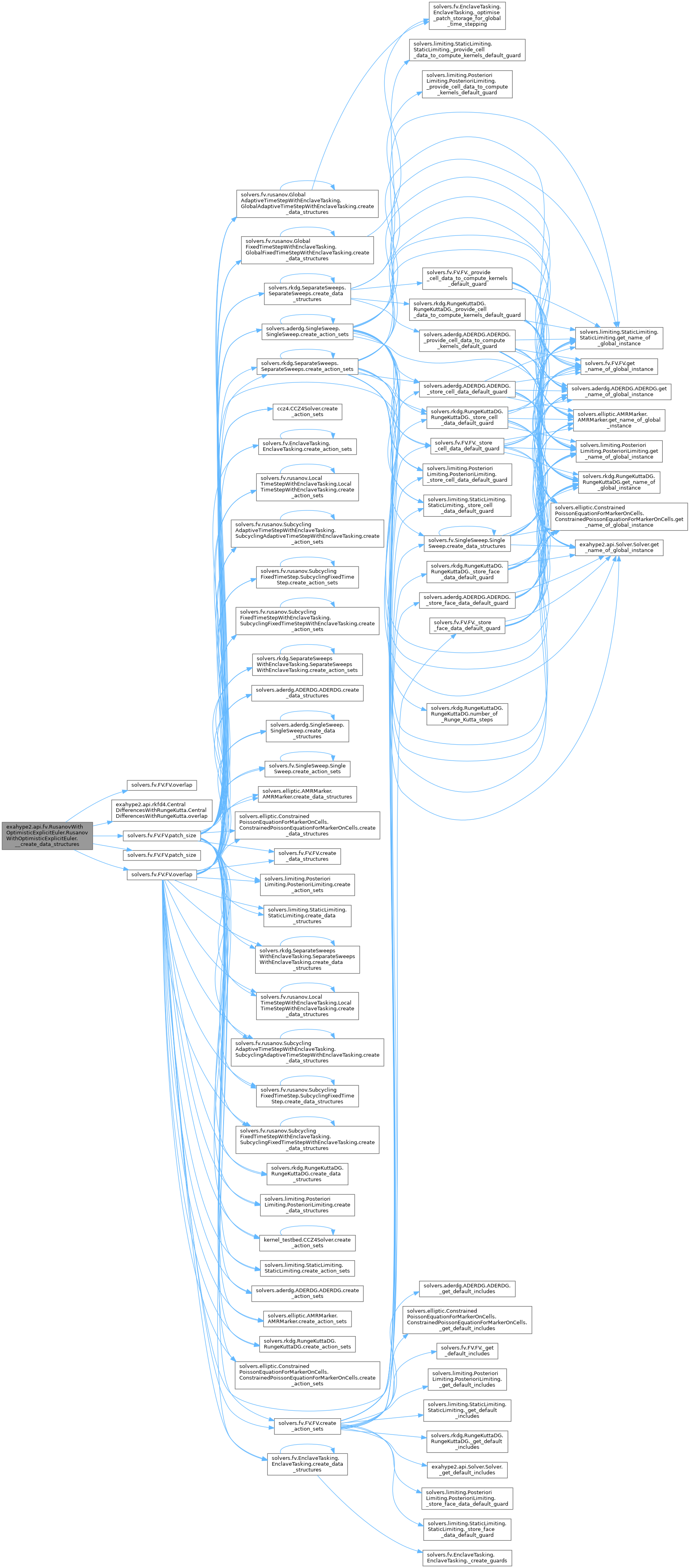
References solvers.aderdg.actionsets.AbstractADERDGActionSet.AbstractADERDGActionSet._solver, solvers.fv.actionsets.AbstractFVActionSet.AbstractFVActionSet._solver, solvers.fv.EnclaveTasking.UpdateCell._solver, solvers.fv.SingleSweep.UpdateCell._solver, solvers.limiting.actionsets.AbstractLimiterActionSet.AbstractLimiterActionSet._solver, solvers.rkdg.actionsets.AbstractRungeKuttaDGActionSet.AbstractRungeKuttaDGActionSet._solver, exagrype.api.FD4WithKODissipation.FD4WithKODissipation._solver, exahype2.api.blockstructured.AdaptMeshAndBalanceLoad.AdaptMeshAndBalanceLoad._solver, exahype2.api.blockstructured.ConsumeRefinementRequests.ConsumeRefinementRequests._solver, exahype2.api.blockstructured.DynamicMeshRefinement.DynamicMeshRefinement._solver, exahype2.api.blockstructured.LoadCheckpoint._LoadPatchesFromCheckpoint._solver, exahype2.api.blockstructured.LoadCheckpoint.LoadCheckpoint._solver, exahype2.api.fv.actionsets.AbstractFVActionSet.AbstractFVActionSet._solver, exahype2.api.fv.actionsets.ApplyDirichletBoundaryConditions.ApplyDirichletBoundaryConditions._solver, exahype2.api.fv.actionsets.DiscardPatchInterior.DiscardPatchInterior._solver, exahype2.api.fv.AdaptMeshAndBalanceLoad.AdaptMeshAndBalanceLoad._solver, exahype2.api.fv.PlotAsVTKFile.PlotAsVTKFile._solver, exahype2.api.fv.RusanovWithExplicitEuler.RusanovWithExplicitEuler._solver, exahype2.api.fv.RusanovWithOptimisticExplicitEuler.RusanovWithOptimisticExplicitEuler._solver, exahype2.api.fv.SetupSimulationOverRegularGrid.SetupSimulationOverRegularGrid._solver, exahype2.api.fv.SetupSimulationWithUserCodedRefinementCriterion.SetupSimulationWithUserCodedRefinementCriterion._solver, exahype2.api.fv.WriteCheckpoint.WriteCheckpoint._solver, exahype2.api.rkfd4.actionsets.AbstractRKFD4ActionSet.AbstractRKFD4ActionSet._solver, exahype2.api.rkfd4.actionsets.ApplyDirichletBoundaryConditions.ApplyDirichletBoundaryConditions._solver, exahype2.api.rkfd4.AdaptMeshAndBalanceLoad.AdaptMeshAndBalanceLoad._solver, exahype2.api.rkfd4.CentralDifferencesWithRungeKutta.CentralDifferencesWithRungeKutta._solver, exahype2.api.rkfd4.PlotAsVTKFile.PlotAsVTKFile._solver, exahype2.api.rkfd4.SetupSimulationOverRegularGrid.SetupSimulationOverRegularGrid._solver, exahype2.api.rkfd4.WriteCheckpoint.WriteCheckpoint._solver, exahype2.api.Solver.Solver.SolverGenerator._solver, exahype2.api.Solver.Solver.NumericalScheme._solver, exahype2.api.Solver.Solver.GridConstruction._solver, exahype2.api.Solver.Solver.Plotter._solver, exahype2.api.Solver.Solver.MeshAdaptation._solver, 20_additional-solver-steps.RusanovWithDensityFloor._solver, 20_additional-solver-steps.RungeKuttaWithDensityFloor._solver, solvers.fv.FV.FV.overlap(), solvers.fv.FV.FV.overlap(), exahype2.api.fv.actionsets.InsertPatchInterior.InsertPatchInterior.overlap, exahype2.api.fv.RusanovWithExplicitEuler.RusanovWithExplicitEuler.overlap, exahype2.api.fv.RusanovWithOptimisticExplicitEuler.RusanovWithOptimisticExplicitEuler.overlap, exahype2.api.rkfd4.CentralDifferencesWithRungeKutta.CentralDifferencesWithRungeKutta.overlap(), api.ProjectPatchWithHaloOntoFaces.ProjectPatchWithHaloOntoFaces.overlap, toolbox::blockstructured::internal::FaceInterpolationOperatorKey.overlap, DiffuseInterface< Shortcuts, basisSize >.patch_size, solvers.fv.FV.FV.patch_size(), solvers.fv.FV.FV.patch_size(), exahype2.api.blockstructured.DynamicMeshRefinement.DynamicMeshRefinement.patch_size, exahype2.api.fv.actionsets.ComputeGlobalCFLCondition.ComputeGlobalCFLCondition.patch_size, exahype2.api.fv.actionsets.InsertPatchInterior.InsertPatchInterior.patch_size, exahype2.api.fv.RusanovWithExplicitEuler.RusanovWithExplicitEuler.patch_size, exahype2.api.fv.RusanovWithOptimisticExplicitEuler.RusanovWithOptimisticExplicitEuler.patch_size, exahype2.api.rkfd4.actionsets.ComputeTimeStepSize.ComputeTimeStepSize.patch_size, exahype2.api.rkfd4.CentralDifferencesWithRungeKutta.CentralDifferencesWithRungeKutta.patch_size, and exahype2.api.fv.RusanovWithOptimisticExplicitEuler.RusanovWithOptimisticExplicitEuler.spawn_optimistic_calculations_as_task.
|
private |
Calling this function is delayed until all PDE term information is provided.
In this way we can avoid generating code that will not be used. The following information is required to translate a Python function using DSLHyPE:
TODO: Currently the MLIR types are passed manually here, this should ideally be inferred
Definition at line 1469 of file RusanovWithOptimisticExplicitEuler.py.
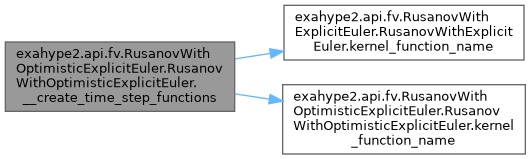
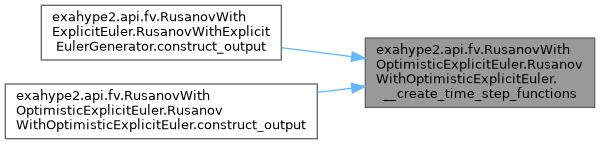
References solvers.aderdg.actionsets.AbstractADERDGActionSet.AbstractADERDGActionSet._solver, solvers.fv.actionsets.AbstractFVActionSet.AbstractFVActionSet._solver, solvers.fv.EnclaveTasking.UpdateCell._solver, solvers.fv.SingleSweep.UpdateCell._solver, solvers.limiting.actionsets.AbstractLimiterActionSet.AbstractLimiterActionSet._solver, solvers.rkdg.actionsets.AbstractRungeKuttaDGActionSet.AbstractRungeKuttaDGActionSet._solver, exagrype.api.FD4WithKODissipation.FD4WithKODissipation._solver, exahype2.api.blockstructured.AdaptMeshAndBalanceLoad.AdaptMeshAndBalanceLoad._solver, exahype2.api.blockstructured.ConsumeRefinementRequests.ConsumeRefinementRequests._solver, exahype2.api.blockstructured.DynamicMeshRefinement.DynamicMeshRefinement._solver, exahype2.api.blockstructured.LoadCheckpoint._LoadPatchesFromCheckpoint._solver, exahype2.api.blockstructured.LoadCheckpoint.LoadCheckpoint._solver, exahype2.api.fv.actionsets.AbstractFVActionSet.AbstractFVActionSet._solver, exahype2.api.fv.actionsets.ApplyDirichletBoundaryConditions.ApplyDirichletBoundaryConditions._solver, exahype2.api.fv.actionsets.DiscardPatchInterior.DiscardPatchInterior._solver, exahype2.api.fv.AdaptMeshAndBalanceLoad.AdaptMeshAndBalanceLoad._solver, exahype2.api.fv.PlotAsVTKFile.PlotAsVTKFile._solver, exahype2.api.fv.RusanovWithExplicitEuler.RusanovWithExplicitEuler._solver, exahype2.api.fv.RusanovWithOptimisticExplicitEuler.RusanovWithOptimisticExplicitEuler._solver, exahype2.api.fv.SetupSimulationOverRegularGrid.SetupSimulationOverRegularGrid._solver, exahype2.api.fv.SetupSimulationWithUserCodedRefinementCriterion.SetupSimulationWithUserCodedRefinementCriterion._solver, exahype2.api.fv.WriteCheckpoint.WriteCheckpoint._solver, exahype2.api.rkfd4.actionsets.AbstractRKFD4ActionSet.AbstractRKFD4ActionSet._solver, exahype2.api.rkfd4.actionsets.ApplyDirichletBoundaryConditions.ApplyDirichletBoundaryConditions._solver, exahype2.api.rkfd4.AdaptMeshAndBalanceLoad.AdaptMeshAndBalanceLoad._solver, exahype2.api.rkfd4.CentralDifferencesWithRungeKutta.CentralDifferencesWithRungeKutta._solver, exahype2.api.rkfd4.PlotAsVTKFile.PlotAsVTKFile._solver, exahype2.api.rkfd4.SetupSimulationOverRegularGrid.SetupSimulationOverRegularGrid._solver, exahype2.api.rkfd4.WriteCheckpoint.WriteCheckpoint._solver, exahype2.api.Solver.Solver.SolverGenerator._solver, exahype2.api.Solver.Solver.NumericalScheme._solver, exahype2.api.Solver.Solver.GridConstruction._solver, exahype2.api.Solver.Solver.Plotter._solver, exahype2.api.Solver.Solver.MeshAdaptation._solver, 20_additional-solver-steps.RusanovWithDensityFloor._solver, 20_additional-solver-steps.RungeKuttaWithDensityFloor._solver, exahype2.api.fv.RusanovWithExplicitEuler.RusanovWithExplicitEuler.kernel_function_name(), exahype2.api.fv.RusanovWithOptimisticExplicitEuler.RusanovWithOptimisticExplicitEuler.kernel_function_name(), exahype2.api.fv.RusanovWithExplicitEuler.RusanovWithExplicitEuler.kernel_namespace, exahype2.api.fv.RusanovWithOptimisticExplicitEuler.RusanovWithOptimisticExplicitEuler.kernel_namespace, and exahype2.api.rkfd4.CentralDifferencesWithRungeKutta.CentralDifferencesWithRungeKutta.kernel_namespace.
Referenced by exahype2.api.fv.RusanovWithExplicitEuler.RusanovWithExplicitEuler.construct_output(), and exahype2.api.fv.RusanovWithOptimisticExplicitEuler.RusanovWithOptimisticExplicitEuler.construct_output().
| exahype2.api.fv.RusanovWithOptimisticExplicitEuler.RusanovWithOptimisticExplicitEuler.construct_output | ( | self, | |
| exahype2_project, | |||
| peano_project, | |||
| time_step | |||
| ) |
Has to be implemented by subclass.
time_step: peano4.api.taskgraph.Graph The task graph of the surrounding exahype2_project's time stepping phase, so the numerical scheme can add its own tasks into it.
Reimplemented from exahype2.api.Solver.Solver.NumericalScheme.
Definition at line 1196 of file RusanovWithOptimisticExplicitEuler.py.
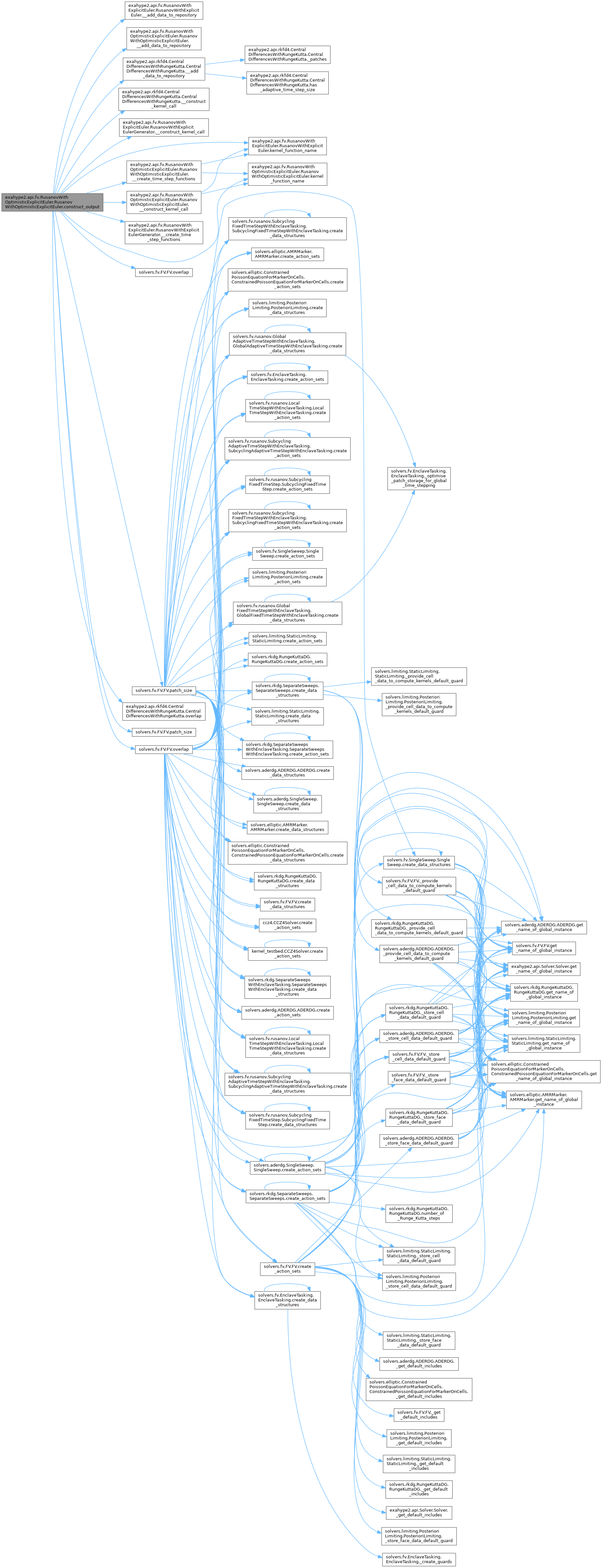
References exahype2.api.fv.RusanovWithExplicitEuler.RusanovWithExplicitEuler.__add_data_to_repository(), exahype2.api.fv.RusanovWithOptimisticExplicitEuler.RusanovWithOptimisticExplicitEuler.__add_data_to_repository(), exahype2.api.rkfd4.CentralDifferencesWithRungeKutta.CentralDifferencesWithRungeKutta.__add_data_to_repository(), exahype2.api.rkfd4.CentralDifferencesWithRungeKutta.CentralDifferencesWithRungeKutta.__construct_kernel_call(), exahype2.api.fv.RusanovWithExplicitEuler.RusanovWithExplicitEuler.__construct_kernel_call(), exahype2.api.fv.RusanovWithOptimisticExplicitEuler.RusanovWithOptimisticExplicitEuler.__construct_kernel_call(), exahype2.api.fv.RusanovWithExplicitEuler.RusanovWithExplicitEuler.__create_time_step_functions(), exahype2.api.fv.RusanovWithOptimisticExplicitEuler.RusanovWithOptimisticExplicitEuler.__create_time_step_functions(), solvers.aderdg.actionsets.AbstractADERDGActionSet.AbstractADERDGActionSet._solver, solvers.fv.actionsets.AbstractFVActionSet.AbstractFVActionSet._solver, solvers.fv.EnclaveTasking.UpdateCell._solver, solvers.fv.SingleSweep.UpdateCell._solver, solvers.limiting.actionsets.AbstractLimiterActionSet.AbstractLimiterActionSet._solver, solvers.rkdg.actionsets.AbstractRungeKuttaDGActionSet.AbstractRungeKuttaDGActionSet._solver, exagrype.api.FD4WithKODissipation.FD4WithKODissipation._solver, exahype2.api.blockstructured.AdaptMeshAndBalanceLoad.AdaptMeshAndBalanceLoad._solver, exahype2.api.blockstructured.ConsumeRefinementRequests.ConsumeRefinementRequests._solver, exahype2.api.blockstructured.DynamicMeshRefinement.DynamicMeshRefinement._solver, exahype2.api.blockstructured.LoadCheckpoint._LoadPatchesFromCheckpoint._solver, exahype2.api.blockstructured.LoadCheckpoint.LoadCheckpoint._solver, exahype2.api.fv.actionsets.AbstractFVActionSet.AbstractFVActionSet._solver, exahype2.api.fv.actionsets.ApplyDirichletBoundaryConditions.ApplyDirichletBoundaryConditions._solver, exahype2.api.fv.actionsets.DiscardPatchInterior.DiscardPatchInterior._solver, exahype2.api.fv.AdaptMeshAndBalanceLoad.AdaptMeshAndBalanceLoad._solver, exahype2.api.fv.PlotAsVTKFile.PlotAsVTKFile._solver, exahype2.api.fv.RusanovWithExplicitEuler.RusanovWithExplicitEuler._solver, exahype2.api.fv.RusanovWithOptimisticExplicitEuler.RusanovWithOptimisticExplicitEuler._solver, exahype2.api.fv.SetupSimulationOverRegularGrid.SetupSimulationOverRegularGrid._solver, exahype2.api.fv.SetupSimulationWithUserCodedRefinementCriterion.SetupSimulationWithUserCodedRefinementCriterion._solver, exahype2.api.fv.WriteCheckpoint.WriteCheckpoint._solver, exahype2.api.rkfd4.actionsets.AbstractRKFD4ActionSet.AbstractRKFD4ActionSet._solver, exahype2.api.rkfd4.actionsets.ApplyDirichletBoundaryConditions.ApplyDirichletBoundaryConditions._solver, exahype2.api.rkfd4.AdaptMeshAndBalanceLoad.AdaptMeshAndBalanceLoad._solver, exahype2.api.rkfd4.CentralDifferencesWithRungeKutta.CentralDifferencesWithRungeKutta._solver, exahype2.api.rkfd4.PlotAsVTKFile.PlotAsVTKFile._solver, exahype2.api.rkfd4.SetupSimulationOverRegularGrid.SetupSimulationOverRegularGrid._solver, exahype2.api.rkfd4.WriteCheckpoint.WriteCheckpoint._solver, exahype2.api.Solver.Solver.SolverGenerator._solver, exahype2.api.Solver.Solver.NumericalScheme._solver, exahype2.api.Solver.Solver.GridConstruction._solver, exahype2.api.Solver.Solver.Plotter._solver, exahype2.api.Solver.Solver.MeshAdaptation._solver, 20_additional-solver-steps.RusanovWithDensityFloor._solver, 20_additional-solver-steps.RungeKuttaWithDensityFloor._solver, exahype2.api.fv.actionsets.ComputeGlobalCFLCondition.ComputeGlobalCFLCondition.cfl_constant, exahype2.api.fv.RusanovWithExplicitEuler.RusanovWithExplicitEuler.cfl_constant, exahype2.api.fv.RusanovWithOptimisticExplicitEuler.RusanovWithOptimisticExplicitEuler.cfl_constant, exahype2.api.rkfd4.actionsets.ComputeTimeStepSize.ComputeTimeStepSize.cfl_constant, exahype2.api.rkfd4.CentralDifferencesWithRungeKutta.CentralDifferencesWithRungeKutta.cfl_constant, exahype2.api.fv.actionsets.SpawnTaskToUpdateCellInterior.SpawnTaskToUpdateCellInterior.damp_time_step_size, exahype2.api.fv.RusanovWithOptimisticExplicitEuler.RusanovWithOptimisticExplicitEuler.damp_time_step_size, exahype2.api.fv.RusanovWithExplicitEuler.RusanovWithExplicitEuler.kernel_function_name(), exahype2.api.fv.RusanovWithOptimisticExplicitEuler.RusanovWithOptimisticExplicitEuler.kernel_function_name(), exahype2.api.fv.RusanovWithExplicitEuler.RusanovWithExplicitEuler.kernel_namespace, exahype2.api.fv.RusanovWithOptimisticExplicitEuler.RusanovWithOptimisticExplicitEuler.kernel_namespace, exahype2.api.rkfd4.CentralDifferencesWithRungeKutta.CentralDifferencesWithRungeKutta.kernel_namespace, exahype2.api.blockstructured.DynamicMeshRefinement.DynamicMeshRefinement.max_volume_size, exahype2.api.fv.RusanovWithExplicitEuler.RusanovWithExplicitEuler.max_volume_size, exahype2.api.fv.RusanovWithOptimisticExplicitEuler.RusanovWithOptimisticExplicitEuler.max_volume_size, exahype2.api.rkfd4.CentralDifferencesWithRungeKutta.CentralDifferencesWithRungeKutta.max_volume_size, exahype2.api.blockstructured.DynamicMeshRefinement.DynamicMeshRefinement.min_volume_size, exahype2.api.fv.RusanovWithExplicitEuler.RusanovWithExplicitEuler.min_volume_size, exahype2.api.fv.RusanovWithOptimisticExplicitEuler.RusanovWithOptimisticExplicitEuler.min_volume_size, exahype2.api.fv.SetupSimulationWithUserCodedRefinementCriterion.SetupSimulationWithUserCodedRefinementCriterion.min_volume_size, exahype2.api.rkfd4.CentralDifferencesWithRungeKutta.CentralDifferencesWithRungeKutta.min_volume_size, solvers.fv.FV.FV.overlap(), exahype2.api.fv.actionsets.InsertPatchInterior.InsertPatchInterior.overlap, exahype2.api.fv.RusanovWithExplicitEuler.RusanovWithExplicitEuler.overlap, exahype2.api.fv.RusanovWithOptimisticExplicitEuler.RusanovWithOptimisticExplicitEuler.overlap, exahype2.api.rkfd4.CentralDifferencesWithRungeKutta.CentralDifferencesWithRungeKutta.overlap(), solvers.fv.FV.FV.overlap(), api.ProjectPatchWithHaloOntoFaces.ProjectPatchWithHaloOntoFaces.overlap, toolbox::blockstructured::internal::FaceInterpolationOperatorKey.overlap, DiffuseInterface< Shortcuts, basisSize >.patch_size, solvers.fv.FV.FV.patch_size(), solvers.fv.FV.FV.patch_size(), exahype2.api.blockstructured.DynamicMeshRefinement.DynamicMeshRefinement.patch_size, exahype2.api.fv.actionsets.ComputeGlobalCFLCondition.ComputeGlobalCFLCondition.patch_size, exahype2.api.fv.actionsets.InsertPatchInterior.InsertPatchInterior.patch_size, exahype2.api.fv.RusanovWithExplicitEuler.RusanovWithExplicitEuler.patch_size, exahype2.api.fv.RusanovWithOptimisticExplicitEuler.RusanovWithOptimisticExplicitEuler.patch_size, exahype2.api.rkfd4.actionsets.ComputeTimeStepSize.ComputeTimeStepSize.patch_size, and exahype2.api.rkfd4.CentralDifferencesWithRungeKutta.CentralDifferencesWithRungeKutta.patch_size.
| Solver.MeshAdaptation exahype2.api.fv.RusanovWithOptimisticExplicitEuler.RusanovWithOptimisticExplicitEuler.create_default_mesh_adaptation | ( | self | ) |
The Finite Volume schemes adapt the mesh and balance the load through exahype2.api.fv.AdaptMeshAndBalanceLoad by default.
Reimplemented from exahype2.api.Solver.Solver.NumericalScheme.
Definition at line 1185 of file RusanovWithOptimisticExplicitEuler.py.
| str exahype2.api.fv.RusanovWithOptimisticExplicitEuler.RusanovWithOptimisticExplicitEuler.kernel_function_name | ( | self | ) |
Name of the generated time step kernel.
It carries the solver name, as do the kernels/<SolverName>_rusanov*.h files holding it, so two solvers' kernels do not clash.
Definition at line 952 of file RusanovWithOptimisticExplicitEuler.py.
References solvers.aderdg.actionsets.AbstractADERDGActionSet.AbstractADERDGActionSet._solver, solvers.fv.actionsets.AbstractFVActionSet.AbstractFVActionSet._solver, solvers.fv.EnclaveTasking.UpdateCell._solver, solvers.fv.SingleSweep.UpdateCell._solver, solvers.limiting.actionsets.AbstractLimiterActionSet.AbstractLimiterActionSet._solver, solvers.rkdg.actionsets.AbstractRungeKuttaDGActionSet.AbstractRungeKuttaDGActionSet._solver, exagrype.api.FD4WithKODissipation.FD4WithKODissipation._solver, exahype2.api.blockstructured.AdaptMeshAndBalanceLoad.AdaptMeshAndBalanceLoad._solver, exahype2.api.blockstructured.ConsumeRefinementRequests.ConsumeRefinementRequests._solver, exahype2.api.blockstructured.DynamicMeshRefinement.DynamicMeshRefinement._solver, exahype2.api.blockstructured.LoadCheckpoint._LoadPatchesFromCheckpoint._solver, exahype2.api.blockstructured.LoadCheckpoint.LoadCheckpoint._solver, exahype2.api.fv.actionsets.AbstractFVActionSet.AbstractFVActionSet._solver, exahype2.api.fv.actionsets.ApplyDirichletBoundaryConditions.ApplyDirichletBoundaryConditions._solver, exahype2.api.fv.actionsets.DiscardPatchInterior.DiscardPatchInterior._solver, exahype2.api.fv.AdaptMeshAndBalanceLoad.AdaptMeshAndBalanceLoad._solver, exahype2.api.fv.PlotAsVTKFile.PlotAsVTKFile._solver, exahype2.api.fv.RusanovWithExplicitEuler.RusanovWithExplicitEuler._solver, exahype2.api.fv.RusanovWithOptimisticExplicitEuler.RusanovWithOptimisticExplicitEuler._solver, exahype2.api.fv.SetupSimulationOverRegularGrid.SetupSimulationOverRegularGrid._solver, exahype2.api.fv.SetupSimulationWithUserCodedRefinementCriterion.SetupSimulationWithUserCodedRefinementCriterion._solver, exahype2.api.fv.WriteCheckpoint.WriteCheckpoint._solver, exahype2.api.rkfd4.actionsets.AbstractRKFD4ActionSet.AbstractRKFD4ActionSet._solver, exahype2.api.rkfd4.actionsets.ApplyDirichletBoundaryConditions.ApplyDirichletBoundaryConditions._solver, exahype2.api.rkfd4.AdaptMeshAndBalanceLoad.AdaptMeshAndBalanceLoad._solver, exahype2.api.rkfd4.CentralDifferencesWithRungeKutta.CentralDifferencesWithRungeKutta._solver, exahype2.api.rkfd4.PlotAsVTKFile.PlotAsVTKFile._solver, exahype2.api.rkfd4.SetupSimulationOverRegularGrid.SetupSimulationOverRegularGrid._solver, exahype2.api.rkfd4.WriteCheckpoint.WriteCheckpoint._solver, exahype2.api.Solver.Solver.SolverGenerator._solver, exahype2.api.Solver.Solver.NumericalScheme._solver, exahype2.api.Solver.Solver.GridConstruction._solver, exahype2.api.Solver.Solver.Plotter._solver, exahype2.api.Solver.Solver.MeshAdaptation._solver, 20_additional-solver-steps.RusanovWithDensityFloor._solver, and 20_additional-solver-steps.RungeKuttaWithDensityFloor._solver.
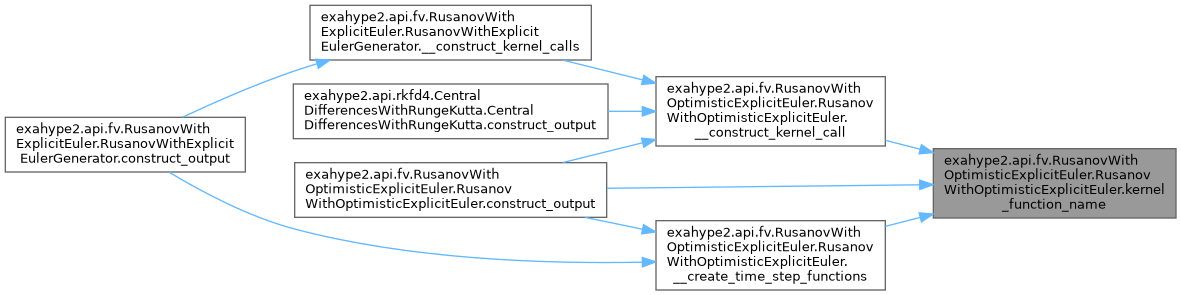
Referenced by exahype2.api.fv.RusanovWithOptimisticExplicitEuler.RusanovWithOptimisticExplicitEuler.__construct_kernel_call(), exahype2.api.fv.RusanovWithExplicitEuler.RusanovWithExplicitEuler.__create_time_step_functions(), exahype2.api.fv.RusanovWithOptimisticExplicitEuler.RusanovWithOptimisticExplicitEuler.__create_time_step_functions(), and exahype2.api.fv.RusanovWithOptimisticExplicitEuler.RusanovWithOptimisticExplicitEuler.construct_output().
|
protected |
Build the reconstruction tasks befilling the patch_with_halo, which is logically temporary.
Both branches: spawn the next time step's patch interior update.
Sommerfeld boundary conditions advance the ghost volumes within the roll over (exahype2.api.blockstructured.BoundaryConditions)
Both branches: project the new data onto the faces.
Both branches: reduce the cells' maximum eigenvalues into the next time step size.
Optimistic branch: insert the patch interior once the shell is updated.
Optimistic branch: update the shell only.
Traditional branch: the update makes any precomputed patch interior obsolete.
Traditional branch: update the whole patch.
Set the ghost volumes along the domain boundary before the reconstruction reads them.
Sommerfeld boundary conditions read the old face data within the roll over, i.e. it has to survive the reconstruction
No task is added if all axes are periodic or for Sommerfeld boundary conditions, which advance the ghost volumes within the roll over
No task is added if all axes are periodic or for Sommerfeld boundary conditions, which advance the ghost volumes within the roll over
Validate the estimated time step size of the optimistic patch interior update, and memorise the admissible time step size
The patch interior of _patch and entry 1 of _max_eigenvalue_and_time_step_sizes remain unchanged, so both are read and written
Runs in parallel to the projection onto the faces
Also roll over the solution
Reads the patch and writes the patch interior plus the estimated time step size
Definition at line 1194 of file RusanovWithOptimisticExplicitEuler.py.
Referenced by exahype2.api.fv.RusanovWithExplicitEuler.RusanovWithExplicitEuler.__add_data_to_repository(), exahype2.api.fv.RusanovWithOptimisticExplicitEuler.RusanovWithOptimisticExplicitEuler.__add_data_to_repository(), exahype2.api.rkfd4.CentralDifferencesWithRungeKutta.CentralDifferencesWithRungeKutta.__add_data_to_repository(), exahype2.api.rkfd4.CentralDifferencesWithRungeKutta.CentralDifferencesWithRungeKutta.__construct_kernel_call(), exahype2.api.fv.RusanovWithExplicitEuler.RusanovWithExplicitEuler.__construct_kernel_call(), exahype2.api.fv.RusanovWithOptimisticExplicitEuler.RusanovWithOptimisticExplicitEuler.__construct_kernel_call(), exahype2.api.fv.RusanovWithExplicitEuler.RusanovWithExplicitEuler.__create_data_structures(), exahype2.api.fv.RusanovWithOptimisticExplicitEuler.RusanovWithOptimisticExplicitEuler.__create_data_structures(), exahype2.api.rkfd4.CentralDifferencesWithRungeKutta.CentralDifferencesWithRungeKutta.__create_data_structures(), exahype2.api.fv.RusanovWithExplicitEuler.RusanovWithExplicitEuler.__create_time_step_functions(), exahype2.api.fv.RusanovWithOptimisticExplicitEuler.RusanovWithOptimisticExplicitEuler.__create_time_step_functions(), solvers.fv.EnclaveTasking.UpdateCell._add_action_set_entries_to_dictionary(), solvers.fv.SingleSweep.UpdateCell._add_action_set_entries_to_dictionary(), exahype2.api.fv.AdaptMeshAndBalanceLoad.AdaptMeshAndBalanceLoad._add_further_adaptation_action_sets(), exahype2.api.rkfd4.AdaptMeshAndBalanceLoad.AdaptMeshAndBalanceLoad._add_further_adaptation_action_sets(), exahype2.api.fv.AdaptMeshAndBalanceLoad.AdaptMeshAndBalanceLoad._add_projection_action_sets(), exahype2.api.rkfd4.AdaptMeshAndBalanceLoad.AdaptMeshAndBalanceLoad._add_projection_action_sets(), exahype2.api.Solver.Solver.Plotter._add_time_interval_bookkeeping_to_solver(), exahype2.api.fv.SetupSimulationOverRegularGrid.SetupSimulationOverRegularGrid._construct_task_graph(), exahype2.api.fv.SetupSimulationWithUserCodedRefinementCriterion.SetupSimulationWithUserCodedRefinementCriterion._create_adapt_mesh_task(), exahype2.api.fv.PlotAsVTKFile.PlotAsVTKFile._create_description(), exahype2.api.rkfd4.PlotAsVTKFile.PlotAsVTKFile._create_description(), exahype2.api.fv.PlotAsVTKFile.PlotAsVTKFile._create_guard(), exahype2.api.rkfd4.PlotAsVTKFile.PlotAsVTKFile._create_guard(), exahype2.api.fv.PlotAsVTKFile.PlotAsVTKFile._create_selected_entries(), exahype2.api.rkfd4.PlotAsVTKFile.PlotAsVTKFile._create_selected_entries(), exahype2.api.fv.PlotAsVTKFile.PlotAsVTKFile._log_plot_graph(), exahype2.api.rkfd4.PlotAsVTKFile.PlotAsVTKFile._log_plot_graph(), exahype2.api.rkfd4.CentralDifferencesWithRungeKutta.CentralDifferencesWithRungeKutta._patches(), exahype2.api.fv.SetupSimulationOverRegularGrid.SetupSimulationOverRegularGrid._report_task_graph(), exahype2.api.rkfd4.CentralDifferencesWithRungeKutta.CentralDifferencesWithRungeKutta._right_hand_side_action_sets(), exahype2.api.SolverToCPPFiles.SolverToCPPFiles._variables_declaration(), exahype2.api.SolverToCPPFiles.SolverToCPPFiles.construct_output(), exahype2.api.blockstructured.AdaptMeshAndBalanceLoad.AdaptMeshAndBalanceLoad.construct_output(), exahype2.api.rkfd4.SetupSimulationOverRegularGrid.SetupSimulationOverRegularGrid.construct_output(), manipulate-solver-steps-illustrations.RusanovWithPostprocessing.construct_output(), exahype2.api.fv.RusanovWithExplicitEuler.RusanovWithExplicitEuler.construct_output(), exahype2.api.fv.RusanovWithOptimisticExplicitEuler.RusanovWithOptimisticExplicitEuler.construct_output(), exahype2.api.rkfd4.CentralDifferencesWithRungeKutta.CentralDifferencesWithRungeKutta.construct_output(), exahype2.api.rkfd4.CentralDifferencesWithRungeKutta.CentralDifferencesWithRungeKutta.create_default_mesh_adaptation(), exahype2.api.Solver.Solver.Plotter.create_finish_call(), exahype2.api.Solver.Solver.Plotter.create_is_active_predicate(), exahype2.api.fv.RusanovWithExplicitEuler.RusanovWithExplicitEuler.create_restriction_of_hanging_faces(), exahype2.api.rkfd4.CentralDifferencesWithRungeKutta.CentralDifferencesWithRungeKutta.create_restriction_of_hanging_faces(), solvers.rkdg.actionsets.AdaptivityCriterion.AdaptivityCriterion.event_lifetime(), solvers.aderdg.actionsets.AdaptivityCriterion.AdaptivityCriterion.get_body_of_operation(), solvers.aderdg.actionsets.Correction.Correction.get_body_of_operation(), solvers.aderdg.actionsets.DynamicAMR.DynamicAMR.get_body_of_operation(), solvers.aderdg.actionsets.HandleBoundary.HandleBoundary.get_body_of_operation(), solvers.aderdg.actionsets.InitialCondition.InitialCondition.get_body_of_operation(), solvers.aderdg.actionsets.PostprocessSolution.EmptyPostprocessSolution.get_body_of_operation(), solvers.aderdg.actionsets.PostprocessSolution.DoFWisePostprocessSolution.get_body_of_operation(), solvers.aderdg.actionsets.PostprocessSolution.CellWisePostprocessSolution.get_body_of_operation(), solvers.aderdg.actionsets.Prediction.Prediction.get_body_of_operation(), solvers.fv.actionsets.AdaptivityCriterion.AdaptivityCriterion.get_body_of_operation(), solvers.fv.actionsets.InitialCondition.InitialCondition.get_body_of_operation(), solvers.fv.actionsets.PostprocessSolution.VolumeWisePostprocessSolution.get_body_of_operation(), solvers.fv.actionsets.PreprocessSolution.VolumeWisePreprocessSolution.get_body_of_operation(), solvers.fv.actionsets.RollOverUpdatedFace.RollOverUpdatedFace.get_body_of_operation(), solvers.fv.EnclaveTasking.MergeEnclaveTaskOutcome.get_body_of_operation(), solvers.limiting.actionsets.CopyAndConvertPatch.CopyAndConvertPatch.get_body_of_operation(), solvers.limiting.actionsets.SaveNewCellData.SaveNewCellData.get_body_of_operation(), solvers.limiting.actionsets.SpreadLimiterStatus.SpreadLimiterStatus.get_body_of_operation(), solvers.limiting.actionsets.VerifyTroubledness.VerifyTroubledness.get_body_of_operation(), solvers.rkdg.actionsets.AdaptivityCriterion.AdaptivityCriterion.get_body_of_operation(), solvers.rkdg.actionsets.AddVolumeAndFaceSolution.AddVolumeAndFaceSolution.get_body_of_operation(), solvers.rkdg.actionsets.ComputeFinalLinearCombination.ComputeFinalLinearCombination.get_body_of_operation(), solvers.rkdg.actionsets.DynamicAMR.DynamicAMR.get_body_of_operation(), solvers.rkdg.actionsets.HandleBoundary.HandleBoundary.get_body_of_operation(), solvers.rkdg.actionsets.InitialCondition.InitialCondition.get_body_of_operation(), solvers.rkdg.actionsets.LinearCombinationOfEstimates.LinearCombinationOfEstimates.get_body_of_operation(), solvers.rkdg.actionsets.PostprocessSolution.DoFWisePostprocessSolution.get_body_of_operation(), solvers.rkdg.actionsets.PostprocessSolution.CellWisePostprocessSolution.get_body_of_operation(), solvers.rkdg.actionsets.PreprocessSolution.DoFWisePreprocessSolution.get_body_of_operation(), solvers.rkdg.actionsets.PreprocessSolution.CellWisePreprocessSolution.get_body_of_operation(), solvers.rkdg.actionsets.ProjectLinearCombinationOfEstimatesOntoFaces.ProjectLinearCombinationOfEstimatesOntoFaces.get_body_of_operation(), solvers.rkdg.actionsets.SolveRiemannProblem.SolveRiemannProblem.get_body_of_operation(), solvers.rkdg.actionsets.SolveVolumeIntegral.SolveVolumeIntegral.get_body_of_operation(), solvers.rkdg.SeparateSweepsWithEnclaveTasking.MergeEnclaveTaskOutcome.get_body_of_operation(), exagrype.api.actionsets.AddKreissOligerDissipation.AddKreissOligerDissipation.get_body_of_operation(), exahype2.api.blockstructured.DynamicMeshRefinement.DynamicMeshRefinement.get_body_of_operation(), exahype2.api.blockstructured.LoadCheckpoint._LoadPatchesFromCheckpoint.get_body_of_operation(), exahype2.api.fv.actionsets.InitialCondition.InitialCondition.get_body_of_operation(), exahype2.api.fv.actionsets.InsertPatchInterior.InsertPatchInterior.get_body_of_operation(), exahype2.api.rkfd4.actionsets.AddLopsidedAdvection.AddLopsidedAdvection.get_body_of_operation(), exahype2.api.rkfd4.actionsets.ComputeLinearCombination.ComputeLinearCombination.get_body_of_operation(), exahype2.api.rkfd4.actionsets.ComputeMaxEigenvalue.ComputeMaxEigenvalue.get_body_of_operation(), exahype2.api.rkfd4.actionsets.EvaluateRightHandSide.EvaluateRightHandSide.get_body_of_operation(), exahype2.api.rkfd4.actionsets.InitialCondition.InitialCondition.get_body_of_operation(), solvers.fv.actionsets.InitialCondition.InitialCondition.get_body_of_prepareTraversal(), exahype2.api.rkfd4.actionsets.ComputeTimeStepSize.ComputeTimeStepSize.get_body_of_unprepareTraversal(), solvers.aderdg.actionsets.AbstractADERDGActionSet.AbstractADERDGActionSet.get_includes(), solvers.aderdg.actionsets.Correction.Correction.get_includes(), solvers.aderdg.actionsets.DynamicAMR.DynamicAMR.get_includes(), solvers.aderdg.actionsets.HandleBoundary.HandleBoundary.get_includes(), solvers.aderdg.actionsets.InitialCondition.InitialCondition.get_includes(), solvers.aderdg.actionsets.PostprocessSolution.EmptyPostprocessSolution.get_includes(), solvers.aderdg.actionsets.PostprocessSolution.DoFWisePostprocessSolution.get_includes(), solvers.aderdg.actionsets.Prediction.Prediction.get_includes(), solvers.fv.actionsets.AbstractFVActionSet.AbstractFVActionSet.get_includes(), solvers.fv.actionsets.InitialCondition.InitialCondition.get_includes(), solvers.fv.EnclaveTasking.UpdateCell.get_includes(), solvers.fv.SingleSweep.UpdateCell.get_includes(), solvers.limiting.actionsets.AbstractLimiterActionSet.AbstractLimiterActionSet.get_includes(), solvers.limiting.actionsets.CopyAndConvertPatch.CopyAndConvertPatch.get_includes(), solvers.limiting.actionsets.SaveNewCellData.SaveNewCellData.get_includes(), solvers.limiting.actionsets.VerifyTroubledness.VerifyTroubledness.get_includes(), solvers.rkdg.actionsets.AbstractRungeKuttaDGActionSet.AbstractRungeKuttaDGActionSet.get_includes(), solvers.rkdg.actionsets.SolveVolumeIntegral.SolveVolumeIntegral.get_includes(), exahype2.api.blockstructured.ConsumeRefinementRequests.ConsumeRefinementRequests.get_includes(), exahype2.api.blockstructured.DynamicMeshRefinement.DynamicMeshRefinement.get_includes(), exahype2.api.fv.actionsets.AbstractFVActionSet.AbstractFVActionSet.get_includes(), exahype2.api.fv.actionsets.ApplyDirichletBoundaryConditions.ApplyDirichletBoundaryConditions.get_includes(), exahype2.api.rkfd4.actionsets.AbstractRKFD4ActionSet.AbstractRKFD4ActionSet.get_includes(), exahype2.api.rkfd4.actionsets.ApplyDirichletBoundaryConditions.ApplyDirichletBoundaryConditions.get_includes(), solvers.rkdg.actionsets.AddVolumeAndFaceSolution.AddVolumeAndFaceSolution.guards(), solvers.rkdg.actionsets.DynamicAMR.DynamicAMR.guards(), solvers.rkdg.actionsets.HandleBoundary.HandleBoundary.guards(), solvers.rkdg.actionsets.LinearCombinationOfEstimates.LinearCombinationOfEstimates.guards(), solvers.rkdg.actionsets.ProjectLinearCombinationOfEstimatesOntoFaces.ProjectLinearCombinationOfEstimatesOntoFaces.guards(), solvers.rkdg.actionsets.SolveRiemannProblem.SolveRiemannProblem.guards(), solvers.rkdg.actionsets.SolveVolumeIntegral.SolveVolumeIntegral.guards(), exahype2.api.blockstructured.LoadCheckpoint.LoadCheckpoint.index_file_name(), exahype2.api.fv.RusanovWithExplicitEuler.RusanovWithExplicitEuler.kernel_function_name(), exahype2.api.fv.RusanovWithOptimisticExplicitEuler.RusanovWithOptimisticExplicitEuler.kernel_function_name(), exahype2.api.rkfd4.CentralDifferencesWithRungeKutta.CentralDifferencesWithRungeKutta.max_eigenvalue_kernel_name(), exahype2.api.fv.PlotAsVTKFile.PlotAsVTKFile.output_file_prefix(), exahype2.api.fv.WriteCheckpoint.WriteCheckpoint.output_file_prefix(), exahype2.api.rkfd4.PlotAsVTKFile.PlotAsVTKFile.output_file_prefix(), exahype2.api.rkfd4.WriteCheckpoint.WriteCheckpoint.output_file_prefix(), and exahype2.api.rkfd4.CentralDifferencesWithRungeKutta.CentralDifferencesWithRungeKutta.right_hand_side_kernel_name().
| exahype2.api.fv.RusanovWithOptimisticExplicitEuler.RusanovWithOptimisticExplicitEuler.cfl_constant |
Both branches: reduce the cells' maximum eigenvalues into the next time step size.
Runs in parallel to the projection onto the faces
Definition at line 946 of file RusanovWithOptimisticExplicitEuler.py.
Referenced by exahype2.api.fv.RusanovWithExplicitEuler.RusanovWithExplicitEuler.construct_output(), exahype2.api.fv.RusanovWithOptimisticExplicitEuler.RusanovWithOptimisticExplicitEuler.construct_output(), and exahype2.api.rkfd4.actionsets.ComputeTimeStepSize.ComputeTimeStepSize.is_adaptive().
| exahype2.api.fv.RusanovWithOptimisticExplicitEuler.RusanovWithOptimisticExplicitEuler.damp_time_step_size |
Both branches: spawn the next time step's patch interior update.
Reads the patch and writes the patch interior plus the estimated time step size
Definition at line 947 of file RusanovWithOptimisticExplicitEuler.py.
Referenced by exahype2.api.fv.RusanovWithOptimisticExplicitEuler.RusanovWithOptimisticExplicitEuler.construct_output().
| exahype2.api.fv.RusanovWithOptimisticExplicitEuler.RusanovWithOptimisticExplicitEuler.kernel_namespace |
Definition at line 945 of file RusanovWithOptimisticExplicitEuler.py.
Referenced by exahype2.api.fv.RusanovWithExplicitEuler.RusanovWithExplicitEuler.__create_time_step_functions(), exahype2.api.fv.RusanovWithOptimisticExplicitEuler.RusanovWithOptimisticExplicitEuler.__create_time_step_functions(), exahype2.api.fv.RusanovWithExplicitEuler.RusanovWithExplicitEuler.construct_output(), exahype2.api.fv.RusanovWithOptimisticExplicitEuler.RusanovWithOptimisticExplicitEuler.construct_output(), and exahype2.api.rkfd4.CentralDifferencesWithRungeKutta.CentralDifferencesWithRungeKutta.construct_output().
| exahype2.api.fv.RusanovWithOptimisticExplicitEuler.RusanovWithOptimisticExplicitEuler.max_volume_size |
Definition at line 940 of file RusanovWithOptimisticExplicitEuler.py.
Referenced by exahype2.api.fv.RusanovWithExplicitEuler.RusanovWithExplicitEuler.construct_output(), exahype2.api.fv.RusanovWithOptimisticExplicitEuler.RusanovWithOptimisticExplicitEuler.construct_output(), and exahype2.api.blockstructured.DynamicMeshRefinement.DynamicMeshRefinement.get_body_of_operation().
| exahype2.api.fv.RusanovWithOptimisticExplicitEuler.RusanovWithOptimisticExplicitEuler.min_volume_size |
Definition at line 939 of file RusanovWithOptimisticExplicitEuler.py.
Referenced by exahype2.api.fv.SetupSimulationWithUserCodedRefinementCriterion.SetupSimulationWithUserCodedRefinementCriterion._create_adapt_mesh_task(), exahype2.api.fv.RusanovWithExplicitEuler.RusanovWithExplicitEuler.construct_output(), exahype2.api.fv.RusanovWithOptimisticExplicitEuler.RusanovWithOptimisticExplicitEuler.construct_output(), and exahype2.api.blockstructured.DynamicMeshRefinement.DynamicMeshRefinement.get_body_of_operation().
| exahype2.api.fv.RusanovWithOptimisticExplicitEuler.RusanovWithOptimisticExplicitEuler.overlap |
Optimistic branch: insert the patch interior once the shell is updated.
Definition at line 942 of file RusanovWithOptimisticExplicitEuler.py.
Referenced by exahype2.api.fv.RusanovWithExplicitEuler.RusanovWithExplicitEuler.__create_data_structures(), exahype2.api.fv.RusanovWithOptimisticExplicitEuler.RusanovWithOptimisticExplicitEuler.__create_data_structures(), exahype2.api.fv.RusanovWithOptimisticExplicitEuler.RusanovWithOptimisticExplicitEuler.construct_output(), and exahype2.api.fv.actionsets.InsertPatchInterior.InsertPatchInterior.get_body_of_operation().
| exahype2.api.fv.RusanovWithOptimisticExplicitEuler.RusanovWithOptimisticExplicitEuler.patch_size |
Optimistic branch: insert the patch interior once the shell is updated.
Both branches: reduce the cells' maximum eigenvalues into the next time step size.
Runs in parallel to the projection onto the faces
Definition at line 941 of file RusanovWithOptimisticExplicitEuler.py.
Referenced by exahype2.api.fv.RusanovWithExplicitEuler.RusanovWithExplicitEuler.__create_data_structures(), exahype2.api.fv.RusanovWithOptimisticExplicitEuler.RusanovWithOptimisticExplicitEuler.__create_data_structures(), exahype2.api.rkfd4.CentralDifferencesWithRungeKutta.CentralDifferencesWithRungeKutta.__create_data_structures(), exahype2.api.fv.RusanovWithExplicitEuler.RusanovWithExplicitEuler.construct_output(), exahype2.api.fv.RusanovWithOptimisticExplicitEuler.RusanovWithOptimisticExplicitEuler.construct_output(), exahype2.api.blockstructured.DynamicMeshRefinement.DynamicMeshRefinement.get_body_of_operation(), and exahype2.api.fv.actionsets.InsertPatchInterior.InsertPatchInterior.get_body_of_operation().
| exahype2.api.fv.RusanovWithOptimisticExplicitEuler.RusanovWithOptimisticExplicitEuler.spawn_optimistic_calculations_as_task |
Definition at line 948 of file RusanovWithOptimisticExplicitEuler.py.
Referenced by exahype2.api.fv.RusanovWithOptimisticExplicitEuler.RusanovWithOptimisticExplicitEuler.__create_data_structures().
 1.9.8