 |
Peano
|
|
Peano
|
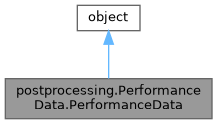
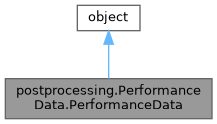
Public Member Functions | |
| __init__ (self, file_name, solver_name="", verbose=False) | |
| :: Attributes | |
| __str__ (self, *args, **kwargs) | |
| parse (self, verbose) | |
| get_time_per_time_step (self) | |
| Returns a whole array of times per time step, so you can plot the evoluation of the cost per step over time. | |
| get_average_time_per_time_step (self) | |
| Returns a whole array of times per time step, so you can plot the evoluation of the cost per step over time. | |
| get_updates (self) | |
| get_time_step_real_time_stamps (self) | |
| Returns a series of real time stamps (in seconds) snapshotted per time step. | |
| get_time_step_simulated_time_stamps (self) | |
| Returns a sequence of time stamps that are the simulated time stamps (where has the simulation been at a certain point) per step. | |
| get_time_step_time_step_size (self) | |
| uses_local_timestepping (self) | |
| timesteps (self) | |
| Should maybe eliminate the time steps that are not really steps. | |
| time_per_time_step (self) | |
| Time of last time step normalised (multiplied) with h^d. | |
| remove_first_n_entries (self, count) | |
| Remove the first count entries from the dataset. | |
Data Fields | |
| total_construction_time | |
| total_time_stepping_time | |
| total_plotting_time | |
| total_construction_steps | |
| total_time_stepping_steps | |
| total_plotting_steps | |
| plotting_time_stamp | |
| valid | |
Private Member Functions | |
| __convert_machine_readable_timestamp_to_seconds (self, data) | |
| Hand in a string in nanoseconds and return double as s. | |
| __convert_human_readable_timestamp_to_seconds (self, data) | |
| Hand in a string in the format hh:mm:ss. | |
| __extract_time_stamp_from_run_call (self, line) | |
Definition at line 11 of file PerformanceData.py.
| postprocessing.PerformanceData.PerformanceData.__init__ | ( | self, | |
| file_name, | |||
solver_name = "", |
|||
verbose = False |
|||
| ) |
:: Attributes
self._number_of_time_steps: Int Includes the empty time steps (warm-up phase) if you have adaptive time stepping.
:: Arguments
file_name: String This is a mandatory field, as it tells us which file to parse.
solver_name: String In theory, you could live without this one if you have only one solver. However, ExaHyPE2 supports multiple solvers within one grid and therefore needs a dedicated solver name to know where to look in the file. Leave it empty if there's only one solver.
Definition at line 12 of file PerformanceData.py.
|
private |
Hand in a string in the format hh:mm:ss.
Definition at line 84 of file PerformanceData.py.
Referenced by postprocessing.PerformanceData.PerformanceData.__extract_time_stamp_from_run_call().

|
private |
Hand in a string in nanoseconds and return double as s.
Definition at line 74 of file PerformanceData.py.
Referenced by postprocessing.PerformanceData.PerformanceData.__extract_time_stamp_from_run_call().

|
private |
Definition at line 108 of file PerformanceData.py.
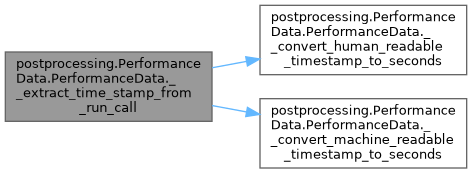
References postprocessing.PerformanceData.PerformanceData.__convert_human_readable_timestamp_to_seconds(), postprocessing.PerformanceData.PerformanceData.__convert_machine_readable_timestamp_to_seconds(), and postprocessing.PerformanceData.PerformanceData._parse_machine_time_format.
| postprocessing.PerformanceData.PerformanceData.__str__ | ( | self, | |
| * | args, | ||
| ** | kwargs | ||
| ) |
Definition at line 98 of file PerformanceData.py.
References postprocessing.PerformanceData.PerformanceData._number_of_time_steps, postprocessing.PerformanceData.PerformanceData._ranks, OutputFile.OutputFile._ranks, postprocessing.PerformanceData.PerformanceData._threads, OutputFile.OutputFile._threads, postprocessing.PerformanceData.PerformanceData.total_construction_steps, postprocessing.PerformanceData.PerformanceData.total_construction_time, postprocessing.PerformanceData.PerformanceData.total_plotting_steps, postprocessing.PerformanceData.PerformanceData.total_plotting_time, postprocessing.PerformanceData.PerformanceData.total_time_stepping_steps, postprocessing.PerformanceData.PerformanceData.total_time_stepping_time, postprocessing.PerformanceData.PerformanceData.valid, and peano4.api.toolbox.particles.postprocessing.Dataset.Dataset.valid.
Referenced by peano4.api.toolbox.particles.postprocessing.ParticleVTUReader.VTUParticleSet.__repr__().

| postprocessing.PerformanceData.PerformanceData.get_average_time_per_time_step | ( | self | ) |
Returns a whole array of times per time step, so you can plot the evoluation of the cost per step over time.
Definition at line 266 of file PerformanceData.py.
References postprocessing.PerformanceData.PerformanceData.get_time_per_time_step().

| postprocessing.PerformanceData.PerformanceData.get_time_per_time_step | ( | self | ) |
Returns a whole array of times per time step, so you can plot the evoluation of the cost per step over time.
Definition at line 253 of file PerformanceData.py.
References postprocessing.PerformanceData.PerformanceData._time_step_time_stamp.
Referenced by postprocessing.PerformanceData.PerformanceData.get_average_time_per_time_step().

| postprocessing.PerformanceData.PerformanceData.get_time_step_real_time_stamps | ( | self | ) |
Returns a series of real time stamps (in seconds) snapshotted per time step.
This is not a mere copy, as the last entry in the local set is the end of the simulation. So we remove this one. At the same time, the very first entry is the start of the simulation or first time step where nothing happens yet (if we have to analyse the eigenvalue first).
Definition at line 287 of file PerformanceData.py.
References postprocessing.PerformanceData.PerformanceData._time_step_time_stamp.
| postprocessing.PerformanceData.PerformanceData.get_time_step_simulated_time_stamps | ( | self | ) |
Returns a sequence of time stamps that are the simulated time stamps (where has the simulation been at a certain point) per step.
This is not a mere copy, as the last entry in the local set is the end of the simulation
Definition at line 306 of file PerformanceData.py.
References postprocessing.PerformanceData.PerformanceData._simulated_time_stamp_max, postprocessing.PerformanceData.PerformanceData._simulated_time_stamp_min, and postprocessing.PerformanceData.PerformanceData.uses_local_timestepping().

| postprocessing.PerformanceData.PerformanceData.get_time_step_time_step_size | ( | self | ) |
Definition at line 326 of file PerformanceData.py.
References postprocessing.PerformanceData.PerformanceData._time_step_size_max, postprocessing.PerformanceData.PerformanceData._time_step_size_min, and postprocessing.PerformanceData.PerformanceData.uses_local_timestepping().

| postprocessing.PerformanceData.PerformanceData.get_updates | ( | self | ) |
Definition at line 283 of file PerformanceData.py.
References postprocessing.PerformanceData.PerformanceData._updates.
| postprocessing.PerformanceData.PerformanceData.parse | ( | self, | |
| verbose | |||
| ) |
Definition at line 123 of file PerformanceData.py.
References postprocessing.PerformanceData.PerformanceData._file_name, peano4.api.Logger.Logger._file_name, tarch.plotter.api.output.Visualiser.Visualiser._file_name, tarch.plotter.api.output.VTUUnstructuredGrid.VTUUnstructuredGrid._file_name, OutputFile.OutputFile._file_name, postprocessing.PerformanceData.PerformanceData._threads, OutputFile.OutputFile._threads, postprocessing.PerformanceData.PerformanceData.valid, and peano4.api.toolbox.particles.postprocessing.Dataset.Dataset.valid.
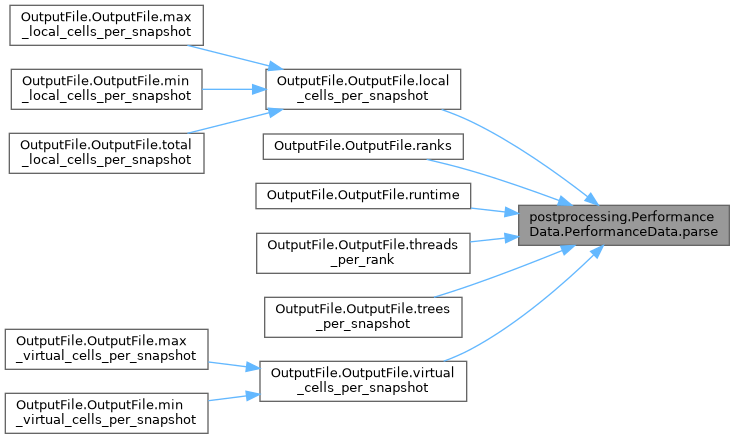
Referenced by OutputFile.OutputFile.local_cells_per_snapshot(), OutputFile.OutputFile.ranks(), OutputFile.OutputFile.runtime(), OutputFile.OutputFile.threads_per_rank(), OutputFile.OutputFile.trees_per_snapshot(), and OutputFile.OutputFile.virtual_cells_per_snapshot().
| postprocessing.PerformanceData.PerformanceData.remove_first_n_entries | ( | self, | |
| count | |||
| ) |
Remove the first count entries from the dataset.
Usually, count is one and anticipates that the solver requires one warm up sweep to determine h and the eigenvalue, e.g.
Definition at line 366 of file PerformanceData.py.
References postprocessing.PerformanceData.PerformanceData._simulated_time_stamp_max, postprocessing.PerformanceData.PerformanceData._simulated_time_stamp_min, postprocessing.PerformanceData.PerformanceData._time_step_size_max, postprocessing.PerformanceData.PerformanceData._time_step_size_min, and postprocessing.PerformanceData.PerformanceData._time_step_time_stamp.
| postprocessing.PerformanceData.PerformanceData.time_per_time_step | ( | self | ) |
Time of last time step normalised (multiplied) with h^d.
Definition at line 356 of file PerformanceData.py.
References postprocessing.PerformanceData.PerformanceData.total_time_stepping_steps, and postprocessing.PerformanceData.PerformanceData.total_time_stepping_time.
| postprocessing.PerformanceData.PerformanceData.timesteps | ( | self | ) |
Should maybe eliminate the time steps that are not really steps.
Definition at line 345 of file PerformanceData.py.
References postprocessing.PerformanceData.PerformanceData._time_step_size_max, and postprocessing.PerformanceData.PerformanceData._time_step_size_min.
| postprocessing.PerformanceData.PerformanceData.uses_local_timestepping | ( | self | ) |
Definition at line 336 of file PerformanceData.py.
References postprocessing.PerformanceData.PerformanceData._time_step_size_max, and postprocessing.PerformanceData.PerformanceData._time_step_size_min.
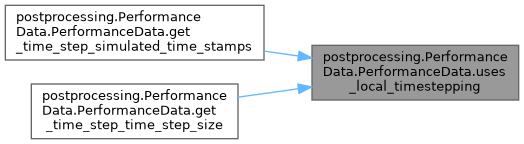
Referenced by postprocessing.PerformanceData.PerformanceData.get_time_step_simulated_time_stamps(), and postprocessing.PerformanceData.PerformanceData.get_time_step_time_step_size().
|
protected |
Definition at line 37 of file PerformanceData.py.
|
protected |
Definition at line 138 of file PerformanceData.py.
|
protected |
Definition at line 32 of file PerformanceData.py.
Referenced by peano4.api.Logger.Logger.close(), tarch.plotter.api.output.Visualiser.Visualiser.display_single_file(), peano4.api.Logger.Logger.file_name(), OutputFile.OutputFile.parse(), postprocessing.PerformanceData.PerformanceData.parse(), tarch.plotter.api.output.Visualiser.Visualiser.read_metadata(), and tarch.plotter.api.output.VTUUnstructuredGrid.VTUUnstructuredGrid.write_vtu().
|
protected |
Definition at line 56 of file PerformanceData.py.
Referenced by postprocessing.PerformanceData.PerformanceData.__str__().
|
protected |
Definition at line 67 of file PerformanceData.py.
Referenced by postprocessing.PerformanceData.PerformanceData.__extract_time_stamp_from_run_call().
|
protected |
Definition at line 36 of file PerformanceData.py.
Referenced by postprocessing.PerformanceData.PerformanceData.__str__(), OutputFile.OutputFile.local_cells_per_snapshot(), OutputFile.OutputFile.ranks(), OutputFile.OutputFile.trees_per_snapshot(), and OutputFile.OutputFile.virtual_cells_per_snapshot().
|
protected |
Definition at line 50 of file PerformanceData.py.
Referenced by postprocessing.PerformanceData.PerformanceData.get_time_step_simulated_time_stamps(), and postprocessing.PerformanceData.PerformanceData.remove_first_n_entries().
|
protected |
Definition at line 51 of file PerformanceData.py.
Referenced by postprocessing.PerformanceData.PerformanceData.get_time_step_simulated_time_stamps(), and postprocessing.PerformanceData.PerformanceData.remove_first_n_entries().
|
protected |
Definition at line 33 of file PerformanceData.py.
Referenced by grid.CellLabel.UpdateCellLabel.get_body_of_operation(), and grid.FaceLabel.UpdateFaceLabel.get_body_of_operation().
|
protected |
Definition at line 35 of file PerformanceData.py.
Referenced by postprocessing.PerformanceData.PerformanceData.__str__(), postprocessing.PerformanceData.PerformanceData.parse(), and OutputFile.OutputFile.threads_per_rank().
|
protected |
Definition at line 52 of file PerformanceData.py.
Referenced by postprocessing.PerformanceData.PerformanceData.get_time_step_time_step_size(), postprocessing.PerformanceData.PerformanceData.remove_first_n_entries(), postprocessing.PerformanceData.PerformanceData.timesteps(), and postprocessing.PerformanceData.PerformanceData.uses_local_timestepping().
|
protected |
Definition at line 53 of file PerformanceData.py.
Referenced by postprocessing.PerformanceData.PerformanceData.get_time_step_time_step_size(), postprocessing.PerformanceData.PerformanceData.remove_first_n_entries(), postprocessing.PerformanceData.PerformanceData.timesteps(), and postprocessing.PerformanceData.PerformanceData.uses_local_timestepping().
|
protected |
|
protected |
Definition at line 54 of file PerformanceData.py.
Referenced by postprocessing.PerformanceData.PerformanceData.get_updates().
| postprocessing.PerformanceData.PerformanceData.plotting_time_stamp |
Definition at line 47 of file PerformanceData.py.
| postprocessing.PerformanceData.PerformanceData.total_construction_steps |
Definition at line 43 of file PerformanceData.py.
Referenced by postprocessing.PerformanceData.PerformanceData.__str__().
| postprocessing.PerformanceData.PerformanceData.total_construction_time |
Definition at line 39 of file PerformanceData.py.
Referenced by postprocessing.PerformanceData.PerformanceData.__str__().
| postprocessing.PerformanceData.PerformanceData.total_plotting_steps |
Definition at line 45 of file PerformanceData.py.
Referenced by postprocessing.PerformanceData.PerformanceData.__str__().
| postprocessing.PerformanceData.PerformanceData.total_plotting_time |
Definition at line 41 of file PerformanceData.py.
Referenced by postprocessing.PerformanceData.PerformanceData.__str__().
| postprocessing.PerformanceData.PerformanceData.total_time_stepping_steps |
Definition at line 44 of file PerformanceData.py.
Referenced by postprocessing.PerformanceData.PerformanceData.__str__(), and postprocessing.PerformanceData.PerformanceData.time_per_time_step().
| postprocessing.PerformanceData.PerformanceData.total_time_stepping_time |
Definition at line 40 of file PerformanceData.py.
Referenced by postprocessing.PerformanceData.PerformanceData.__str__(), and postprocessing.PerformanceData.PerformanceData.time_per_time_step().
| postprocessing.PerformanceData.PerformanceData.valid |
Definition at line 69 of file PerformanceData.py.
Referenced by postprocessing.PerformanceData.PerformanceData.__str__(), peano4.api.toolbox.particles.postprocessing.Dataset.Dataset.parse(), and postprocessing.PerformanceData.PerformanceData.parse().
 1.9.8